

Getting Ready for Weight-Loss Surgery: Tests, Checks and Habits
The weeks before a sleeve or bypass are not a waiting room. They are when the surgical team confirms the operation is safe for you, and when you build habits that make the first months afterwards much easier. People who arrive well prepared tend to have smoother hospital stays and fewer surprises. Here is what the preparation usually involves and how to approach it if you live far from the clinic.
Why preparation takes weeks, not days
Bariatric surgery is a planned operation on people who often have several related conditions at once: raised blood sugar, high blood pressure, sleep apnoea, fatty liver or joint problems. Each of these can influence anaesthesia, wound healing and the risk of clots. The preparation period gives doctors time to find and stabilise them.
It also gives you time. The changes after surgery are large: portion sizes shrink dramatically, eating speed has to slow down, and protein and fluids need constant attention. Practising some of these habits beforehand lowers the shock of the first weeks.
Most clinics ask you to start several weeks ahead. If you are travelling for surgery, that timeline matters even more, because some results have to be reviewed before your dates are confirmed. Starting late usually leads to rushed tests, postponed operations or changed flights.
Treat the preparation phase as part of the treatment itself rather than paperwork. The surgeon will use what is found during these weeks to decide on the type of operation, the anaesthesia plan and how long you should stay in hospital afterwards.
The standard tests and what each one shows
The exact list varies from clinic to clinic, but the core usually includes:
• Blood count, to look for anaemia or signs of infection.
• Biochemistry, covering liver and kidney function, electrolytes and proteins.
• Coagulation tests, because clotting matters both for bleeding and for thrombosis.
• HbA1c, which reflects average blood sugar over roughly three months.
• Urine tests.
• An ECG and, depending on age and history, further heart or lung checks.
HbA1c deserves a special mention. Many people heading for weight-loss surgery have type 2 diabetes or prediabetes without knowing it. A high value does not usually rule out surgery, and the operation itself often improves blood sugar, but the team needs to know so that medication can be adjusted before and after the procedure.
Many people find it practical to do part of the tests at home with their own doctor and send the results ahead. Ask the clinic which results they accept from abroad, how recent they have to be and in which format, so you do not repeat tests unnecessarily on arrival.
Specialist checks before the operation
Beyond laboratory tests, several specialists may need to see you. Typical examples are an anaesthetist, an endocrinologist if blood sugar or hormones are an issue, a cardiologist for heart rhythm or blood pressure concerns, and sometimes a gastroenterologist who may recommend an endoscopy to look at the stomach and oesophagus.
An endoscopy can change the plan. Significant reflux or a hiatal hernia may point a surgeon away from a sleeve towards a bypass, because a sleeve can make reflux worse in some people. A Helicobacter infection is usually treated before surgery.
Many programmes also include a conversation with a dietitian and sometimes a psychologist. This is not a test you pass or fail. It is a chance to talk through eating patterns, emotional eating and how you will manage the dramatic change in portion size.
If you have sleep apnoea and use a CPAP machine, tell the team early and bring the device with you. It is relevant for anaesthesia and recovery, and hospitals generally prefer patients to keep using it after surgery.
Smoking, medication and the final month
Smoking must stop at least a month before surgery. Nicotine narrows blood vessels and slows healing of the staple lines and connections inside the abdomen. It also raises the risk of ulcers, which is a particular concern after a bypass. Vaping and nicotine patches are not a harmless substitute, so ask your surgeon before relying on them.
Medication needs a review too. Blood thinners, some anti-inflammatory painkillers, diabetes drugs and certain supplements may need to be paused or adjusted. Never stop prescribed medication on your own; agree each change with the doctor who prescribed it and with the surgical team.
Many surgeons ask for a short pre-operative diet, usually low in calories and carbohydrates. Its purpose is to shrink a fatty liver, which sits right over the stomach and can make laparoscopic surgery harder.
Use the last weeks to set up life afterwards: a blender, protein products your team recommends, small plates, and a plan for time off. Office work usually resumes after two to four weeks, so arrange leave accordingly.
Organising preparation from another country
When the surgery is abroad, coordination becomes the real task. Ask the clinic for its full test list in writing, which results can be done locally and which must be done on site, and how the results will be reviewed before your trip is booked.
City Medical Centre in Moscow lists blood and urine tests, HbA1c, specialist checks and stopping smoking a month before on its bariatric surgery overview with pre-op requirements. It offers a free first consultation that can be held online, and a personal coordinator follows the patient from the first enquiry. For readers in Massachusetts and nearby states, a dedicated English page explains weight-loss surgery in Moscow for patients from Boston. Prices listed at the time of writing (October 2026) start from $3,600 for a sleeve and from $4,000 for a bypass; the final cost is fixed after the consultation.
Visas, flights and accommodation are not covered in that information, so raise them with the coordinator directly. Also ask how long the surgeon wants you to remain nearby after the operation before flying home.
Good preparation does not remove every risk, but it removes most of the avoidable ones.









г. Москва, Можайское шоссе, д.4, к.1
О клинике
В нашей клинике работают только российские врачи с лицензиями и ответственностью в соответствии с законодательством РФ. Здесь вас ждет самое современное оборудование, а врачи регулярно проходят курсы повышения квалификации. Мы заботимся о наших пациентах, поэтому предлагаем для них всегда наилучшее решение в их случае. Также мы регулярно проводим Акции и Спецпредложения и вы можете получить услуги клиники и комплексные предложения с выгодными скидками.
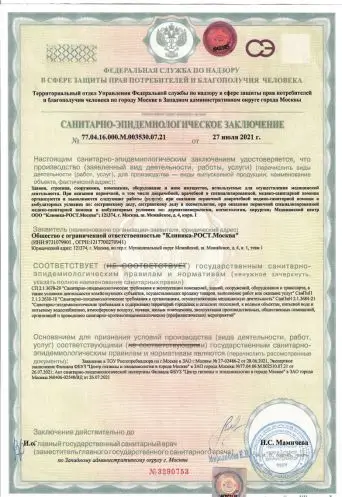
Лицензия на осуществление медицинской деятельности: Л041-01137-77/00336927 выдана Департаментом здравоохранения города Москвы.
Нужна консультация? Свяжитесь с нами:
+7 (499) 550-34-95
doctor@clinic-rost.ru
Москва, Можайское шоссе 4, корпус 1