
Breathing Problems and a Deviated Septum: What Nose Surgery Can and Cannot Fix
Many people who look into rhinoplasty are not only unhappy with the shape of their nose. They also struggle to breathe through one side, snore, or wake with a dry mouth. Sometimes the two problems share a cause, sometimes they do not. This article explains how the septum affects airflow, how surgeons decide between cosmetic rhinoplasty and rhinoseptoplasty, which examinations are needed and what recovery means for your breathing in the first weeks.
How the septum shapes your breathing
The septum is the wall of cartilage and bone that divides the nose into two passages. In most adults it is not perfectly straight, and a mild curve causes no trouble. When the bend is marked, one passage narrows and air meets more resistance on that side.
Typical complaints include a constantly blocked side, breathing through the mouth at night, snoring, frequent sinus infections or a feeling that air does not reach the back of the nose during sport. A deviation can be present from birth or follow an injury, sometimes one that seemed minor at the time.
The septum is only one part of the airway. Swollen turbinates, weak side walls that collapse when you breathe in, allergies and polyps can produce very similar symptoms. That is why a surgeon looks at the whole nose, inside and out, rather than assuming that a visible bump and a blocked side are the same problem. A clear diagnosis is the difference between an operation that improves breathing and one that only changes the profile.
Rhinoplasty, septoplasty or rhinoseptoplasty
Three terms come up in almost every consultation. A cosmetic rhinoplasty changes the outer shape of the nose: the bridge, the width or the tip. A septoplasty straightens the septum to improve airflow and does not aim to change appearance. A rhinoseptoplasty, also called septorhinoplasty, combines both in one operation.
Combining them is common because the structures are connected. A crooked septum can push the outer nose to one side, and correcting the outside without addressing the inside may leave breathing unchanged or even worse. When both function and shape matter to you, say so at the start.
City Medical Centre in Moscow lists rhinoseptoplasty from $5,000, primary rhinoplasty from $4,200 and revision rhinoplasty from $5,400 at the time of writing (October 2026). The final figure is set after the consultation and fixed in the contract. The septorhinoplasty and breathing correction page describes the available techniques, including open and closed approaches and work on the tip.
Tests that show what is really wrong
Breathing complaints need objective evidence. The pre-operative list at City Medical Centre includes a sinus X-ray or CT scan alongside the standard checks: full blood count, biochemistry, coagulation, tests for infections, an ECG and a chest X-ray. A CT image is especially useful because it shows the septum, the turbinates and the sinuses in detail.
If you already have scans from an ENT specialist at home, bring them or send them before the consultation. Describe your symptoms precisely: which side is blocked, whether it changes with the seasons, whether nasal sprays help, and whether you have had a nose injury.
The clinic also offers 3D modelling of the expected result. That helps with the cosmetic part of the plan, but breathing results cannot be judged from a picture. Ask the surgeon to explain separately what will be done inside the nose and why.
Preparation starts 21 days before surgery, and alcohol and smoking should be stopped at least a week before. Smoking in particular slows healing of the delicate lining inside the nose.
Breathing during recovery: why it gets worse before it gets better
Patients who have surgery to breathe better are often surprised that the first days feel worse. After rhinoseptoplasty the inside of the nose is swollen, and splints or dressings support the new position of the septum. Breathing through the nose is limited until they come out.
At City Medical Centre the internal nasal splints are removed on day seven, and an external splint may stay on for up to fourteen days. Swelling inside the nose settles gradually. First improvements usually appear after two to three weeks, full healing takes about four months, and the final shape needs one to one and a half years.
During the first month the clinic advises avoiding sport, sauna, the swimming pool and sun exposure. Sleeping with the head raised and following the surgeon's instructions on rinsing help the lining recover.
Temporary breathing difficulty is listed among the possible effects of surgery, together with swelling, bruising, bleeding, infection and minor asymmetry. Knowing this beforehand makes the first weeks far less worrying.
Questions to ask before you commit
A short list of questions makes the consultation more useful, especially if it takes place online from another country:
- Is my breathing problem caused by the septum, the turbinates, weak side walls or a mix?
- Will the operation be a rhinoplasty or a rhinoseptoplasty, and why?
- Which part of the plan is functional and which is cosmetic?
- What will my nose feel like in the first two weeks?
- What happens if breathing has not improved after healing?
Also ask how follow-up will work once you are back home, and what to send if something worries you during recovery. A personal coordinator handles communication with the clinic from the first enquiry to the end of recovery, so it is worth agreeing in advance how photos and questions will be exchanged.
Patients in Canada can start from the nose surgery page for patients travelling from Toronto, which leads to the same free consultation. Whatever you choose, make sure that your breathing is examined as carefully as the shape you would like to see in the mirror.






г. Москва, Можайское шоссе, д.4, к.1
О клинике
В нашей клинике работают только российские врачи с лицензиями и ответственностью в соответствии с законодательством РФ. Здесь вас ждет самое современное оборудование, а врачи регулярно проходят курсы повышения квалификации. Мы заботимся о наших пациентах, поэтому предлагаем для них всегда наилучшее решение в их случае. Также мы регулярно проводим Акции и Спецпредложения и вы можете получить услуги клиники и комплексные предложения с выгодными скидками.
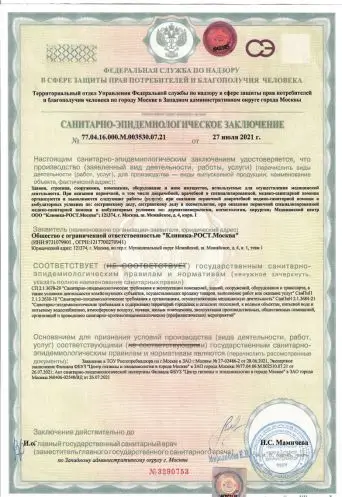
Лицензия на осуществление медицинской деятельности: Л041-01137-77/00336927 выдана Департаментом здравоохранения города Москвы.
Нужна консультация? Свяжитесь с нами:
+7 (499) 550-34-95
doctor@clinic-rost.ru
Москва, Можайское шоссе 4, корпус 1