

When PRP or SVF Is Not the Right Choice: Contraindications and Limits
Regenerative joint treatments are often presented as a gentle option for almost anyone with joint pain. In reality, there are clear situations where PRP or SVF should not be used, should be postponed or is unlikely to help enough. Knowing them before you travel saves time, money and disappointment. This guide explains the medical contraindications a Moscow clinic lists, the temporary reasons to wait, and the cases where a different treatment is the honest answer.
Why screening matters for a non-surgical procedure
PRP and SVF use the patient's own material: plasma rich in platelets and growth factors from a small amount of blood, and, for SVF, a cell fraction isolated from a small fat sample. Because nothing foreign is injected, people sometimes assume that anyone can have it. That is a misunderstanding.
The procedure still involves drawing blood, for SVF a fat sampling under local anaesthetic, and an injection into a joint. Each step carries its own considerations, and the material itself acts on inflammation and tissue repair. Some health conditions make that unsafe or unpredictable.
A responsible clinic therefore screens before agreeing to treatment. City Medical Centre in Moscow offers a free first consultation and a free review of scans, which can be sent in advance. Use that opportunity to describe your full medical history, including conditions that seem unrelated to your joints. The doctor needs the whole picture to tell you whether the treatment is appropriate.
Conditions that rule PRP and SVF out
City Medical Centre lists the following contraindications:
- cancer
- pregnancy and breastfeeding
- blood clotting disorders
- acute infections, including in or near the joint
- a flare-up of a serious chronic illness
- serious heart, kidney or liver disease
The reasons are understandable. Growth factors and repair-related cells are not something to introduce in the presence of cancer. Clotting disorders affect both blood sampling and the injection. An infection in or near the joint must never be treated with an injection into that joint, because it can spread the infection. Pregnancy and breastfeeding are periods when non-essential procedures are generally postponed, and serious heart, kidney or liver disease affects how the body copes with any intervention.
If you are in doubt about whether a diagnosis counts, mention it. Conditions that are well controlled may be discussed with your own specialist, but that decision belongs to the doctors, not to a website. The full list, together with the description of the method, is on the page on PRP and SVF contraindications.
Temporary reasons to wait
Some contraindications are not permanent. The clinic lists a fever, a cold or flu, and skin inflammation over the joint as reasons to postpone the procedure. These are common and easy to overlook when a trip is already planned.
If you develop any of them shortly before your appointment, tell the coordinator rather than hoping it will pass. Travelling with a fever only to be turned away, or worse, having an injection while unwell, helps nobody.
Inflammatory joint diseases need particular care. For arthritis, the clinic states that PRP and SVF do not replace the care of a rheumatologist for a systemic disease, and that treatment is not done during an active joint infection or a severe flare. If you have rheumatoid arthritis or another systemic condition, the timing and the role of injections should be agreed with your rheumatologist.
Medicines matter too. Blood thinners and some anti-inflammatory drugs can be relevant around the procedure. Never stop a prescribed medicine on your own: discuss it with the prescribing doctor and the clinic.
When the joint is too far gone
Regenerative treatment works best at early and moderate stages of joint changes. In osteoarthritis, SVF is used mainly at those stages. When cartilage is largely lost, bone rubs on bone and the joint is deformed, injections are unlikely to restore meaningful function.
City Medical Centre states that at an advanced stage the doctor says honestly if joint replacement is the more realistic option. That honesty is valuable. A patient who spends months on a treatment that cannot work in their situation delays the solution that might.
Signs that suggest an advanced stage include constant pain at rest and at night, a marked loss of movement, visible deformity and imaging that shows severe narrowing of the joint space. Only a doctor reviewing your scans can make that judgement, which is why the free remote review is a sensible first step.
Remember also that the spine is not among the areas the clinic lists: it works with the knee, hip, shoulder, elbow, ankle and hand and wrist joints.
Realistic expectations and a fair decision
Even when there is no contraindication, PRP and SVF are not a guaranteed cure. According to the clinic, pain usually eases over the first month, mobility improves over about three months and the full effect develops over around six months, with follow-ups at one, three and six months. That is a typical course, not a promise, and responses vary. Age, weight, activity level and the joint involved all play a part.
Before agreeing to treatment, ask:
- Which stage are my joint changes at, according to my scans?
- Why PRP, SVF or both in my case?
- What results would make you recommend a different option later?
- What should I do with my current medicines?
Prices are not published on the clinic's site, so ask the coordinator for a written quote. Patients in Ireland can start from the regenerative joint therapy page for patients from Dublin. Being told that a treatment is not right for you is not a setback; it is a sign that the screening is doing its job.



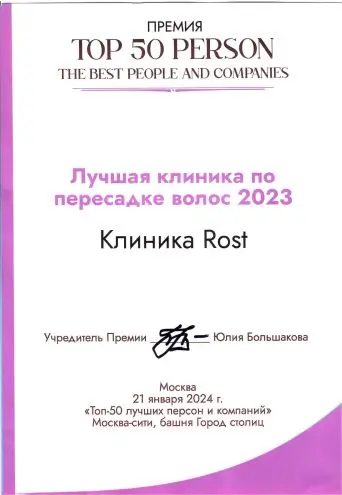
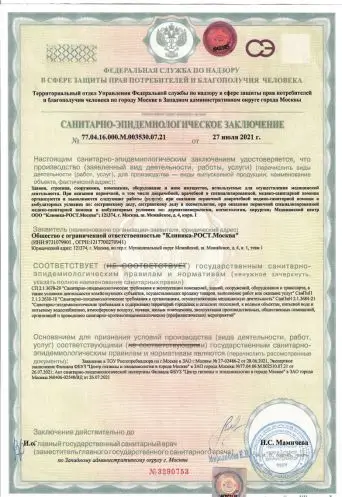







г. Москва, Можайское шоссе, д.4, к.1
О клинике
В нашей клинике работают только российские врачи с лицензиями и ответственностью в соответствии с законодательством РФ. Здесь вас ждет самое современное оборудование, а врачи регулярно проходят курсы повышения квалификации. Мы заботимся о наших пациентах, поэтому предлагаем для них всегда наилучшее решение в их случае. Также мы регулярно проводим Акции и Спецпредложения и вы можете получить услуги клиники и комплексные предложения с выгодными скидками.
Лицензия на осуществление медицинской деятельности: Л041-01137-77/00336927 выдана Департаментом здравоохранения города Москвы.
Нужна консультация? Свяжитесь с нами:
+7 (499) 550-34-95
doctor@clinic-rost.ru
Москва, Можайское шоссе 4, корпус 1